
AI workforce analytics & alignment platform
- 2020–2025
- SkillsEngine
- Executive Director, Product & Design
- 10 to 15 across design, engineering, and PM
Rebuilt a team of 10 to 15 and replaced days of skills consulting with a process under five minutes.
Context
SkillsEngine is a skills-based workforce analysis and labor market alignment platform. It is a commercial startup that grew out of the Center for Employability Outcomes (C4EO) at Texas State Technical College (TSTC), the only public US college funded entirely on student career outcomes.
I was principal business leader and product owner for the 0 to 1 development, design, strategy, and go-to-market of that venture. The goal was to turn a college IP project into a B2B platform that other institutions would use.
The problem
The business was shaped like custom work. Each customer needed a bespoke solution, and foundational skills data was expensive to produce. Turning a job post, a curriculum, or a resumé into structured skills usually meant days of expert consulting and a specialist in the room.
We were successful, but we had hit a ceiling. The product and the brand had to change together. A new platform with the old custom-project habits would not be sustainable if we want to drive greater impact.
What we did
Pivot from custom solutions to a B2B platform, and build like a product company. The brand had to be the same system as the product. And the first AI feature had to remove the consulting bottleneck.
What we made
The product
The platform is a skills data system for workforce analysis and labor market alignment. Curate is the skills analysis, management, and distribution layer for organizations that need industry demand and training supply to use the same language.
Text-to-skills is the feature that changed our approach. It converted unstructured text (job posts, curriculum, and resumés) into structured skills data anchored to SkillsEngine’s common skills language. I co-led its development from early system flows and prototypes through to multi-featured workforce data analytics and alignment platform.
The new workflow replaces days of expert consulting, and its cost, with an ai-driven process, api and application to deliver better results in five minutes.
The brand
The brand was built as one system with the product: the shield mark, the wordmark, and the navy and yellow palette carry from the app to the website, the campaigns, and merch.
The mark
Skills shouldn’t be scary
A short brand film I made myself with Runway and Midjourney.
The poster campaign
Nine posters take the workforce themes, from closing the skills gap and teaching what matters to upskilling and career growth, and pair a direct line with AI-generated illustration. They were also a test of whether generative image tools could speed up the work and still produce one consistent campaign. The full set is in the Posters gallery below.


Three of the nine: closing the skills gap, teaching what matters, and upskilling.
Merch
The shield works as a small chest logo, and the wordmark runs vertically down the back of the tees. A white cap carries the horizontal logo and a navy snapback the shield, with sweatshirts to match, in navy on heather grey and white on charcoal. These are mockups, not photos of produced merch.
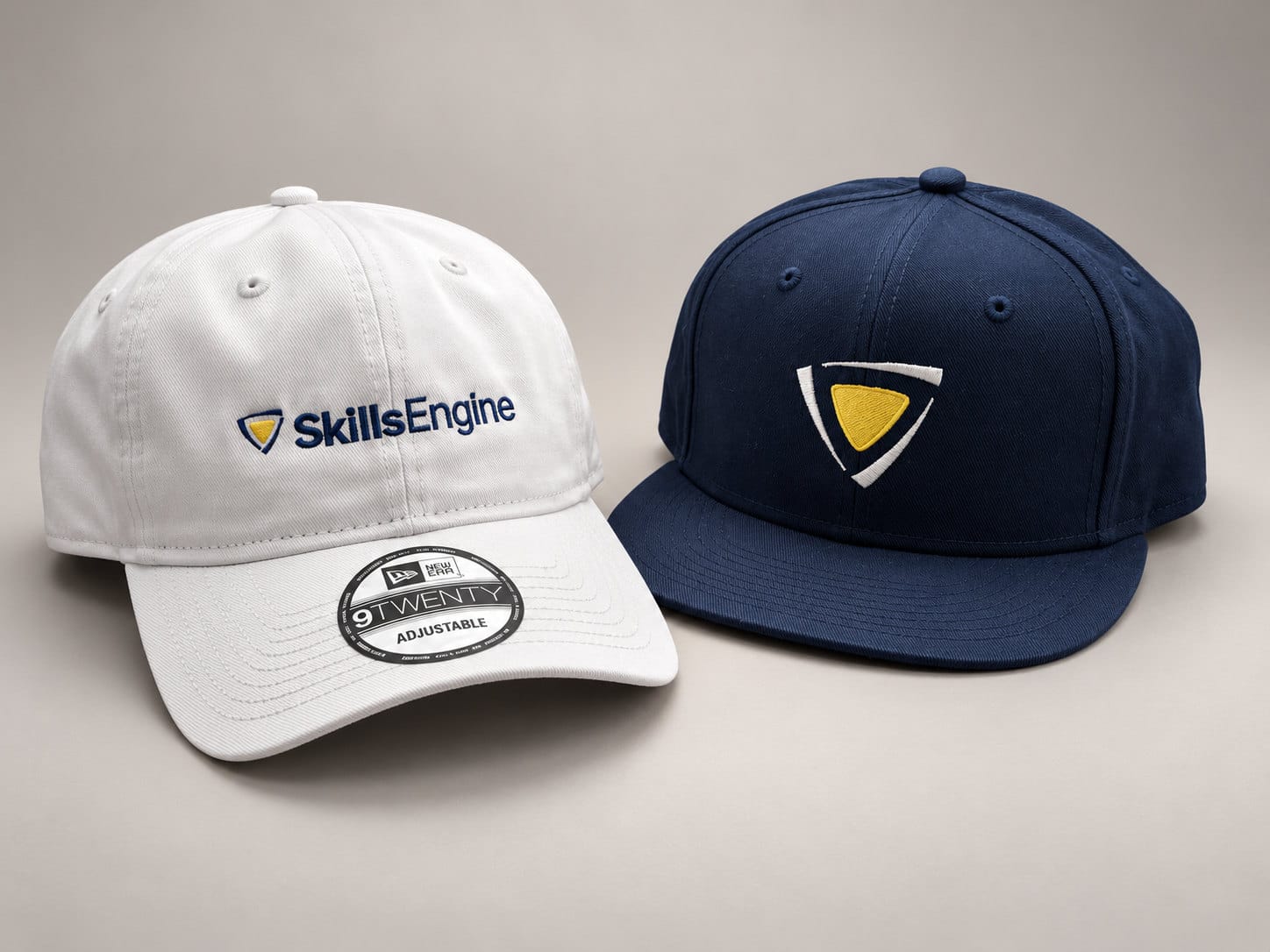
Mockup: a white dad cap with the horizontal logo and a navy snapback with the shield.
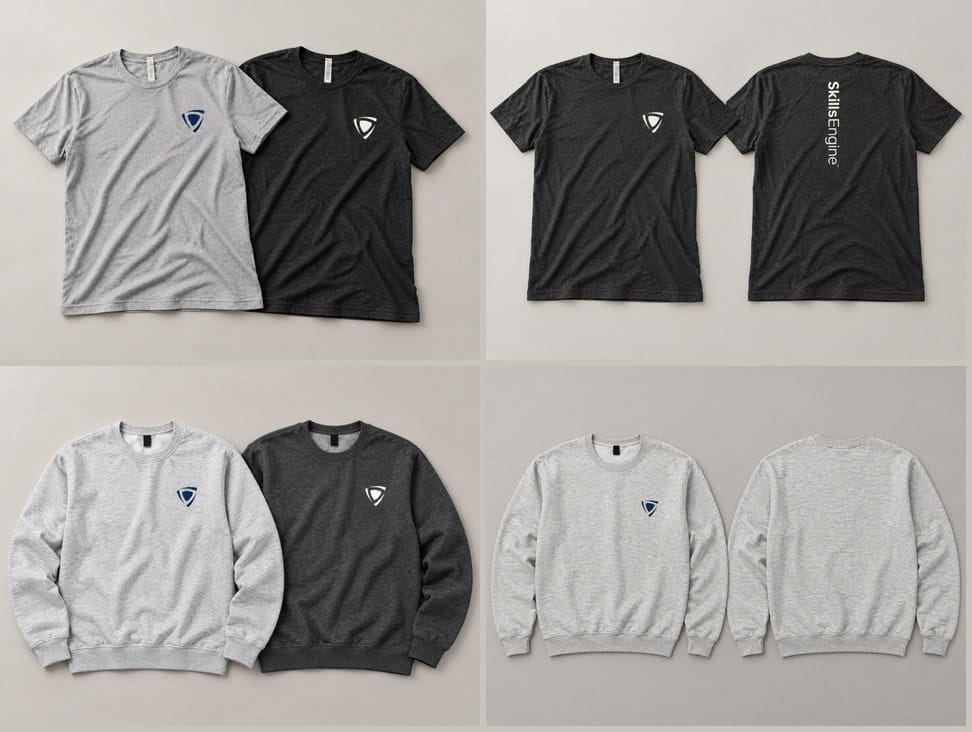
Mockup: the colorways across tees and sweatshirts, navy on heather grey and white on charcoal.
The earlier brand and C4EO refresh is in the archive, and the system-level writeup is Design systems for teams that build fast.
The website
I designed and built SkillsEngine’s website twice: a 2021 rebuild on Webflow, and a 2024 to 2025 redesign on Ghost that carried the pivot to a platform.
2021: out of Squarespace, into Webflow
I moved the site off Squarespace and into Webflow, where I built the CMS, the content, and the design. It refreshed the brand, the positioning, and the user experience of what was then a custom solutions and consulting business.
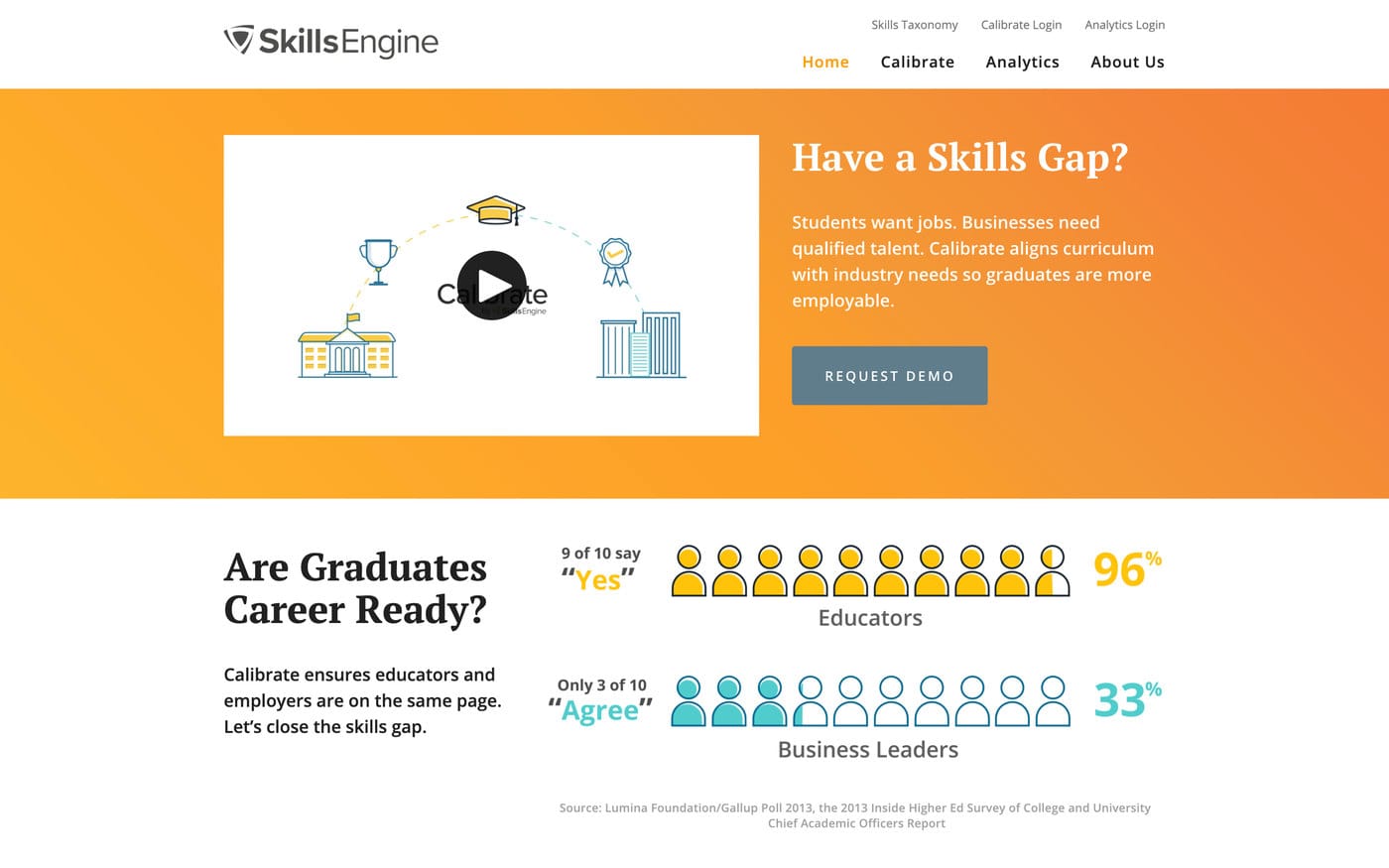
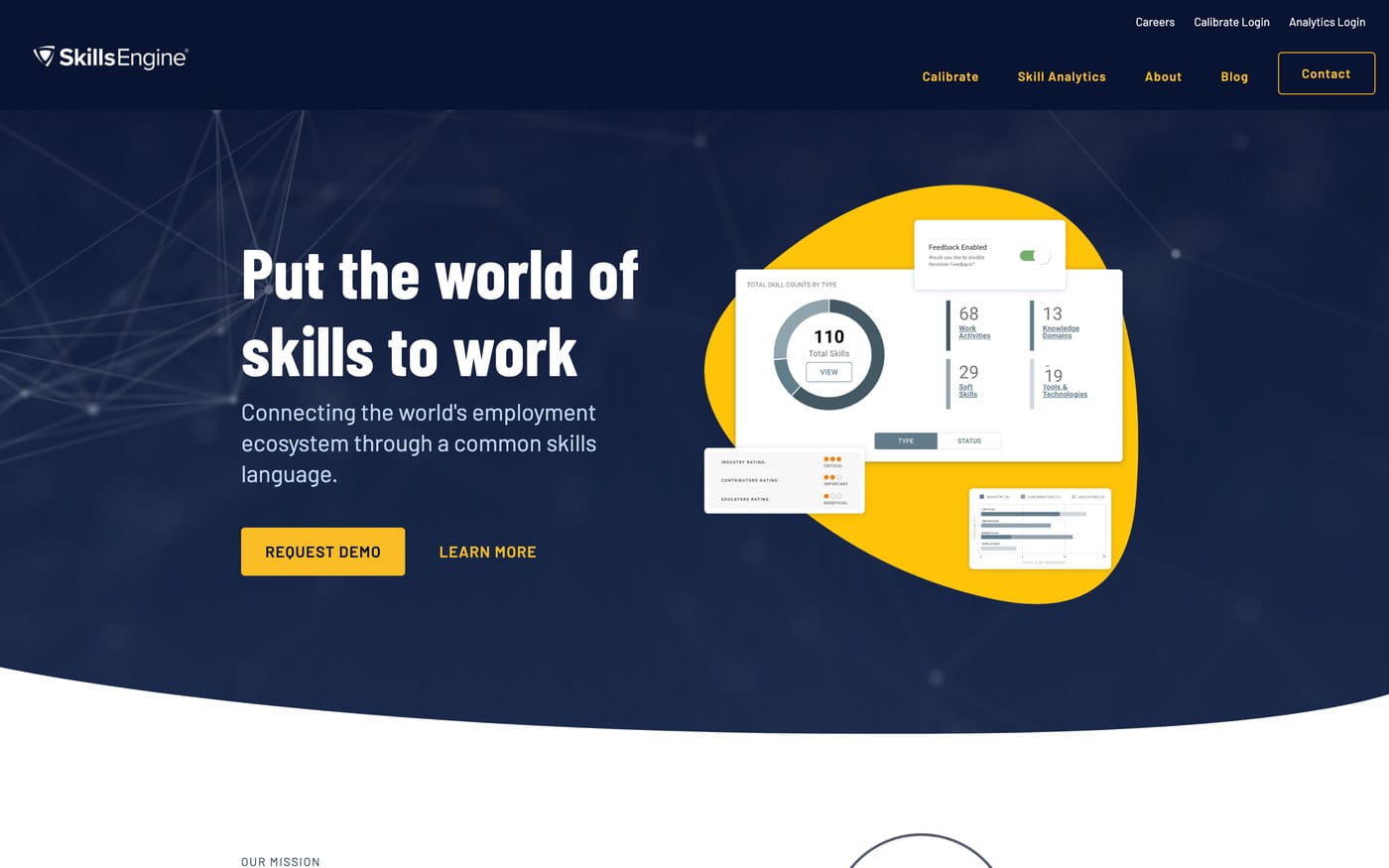
Before and after the 2021 rebuild.
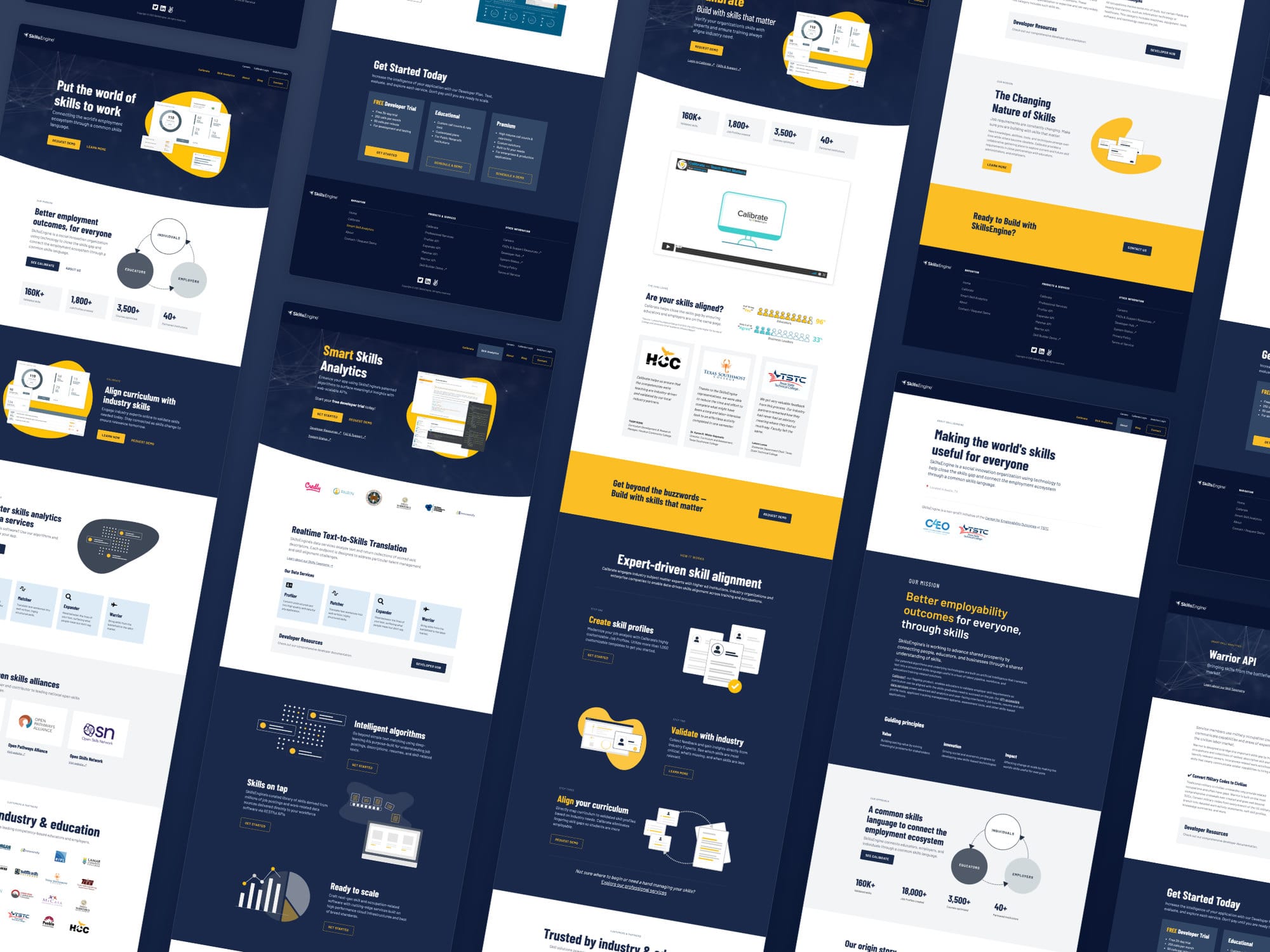
The 2021 page system.
2024 to 2025: the platform pivot
I was later promoted to lead the whole team as executive director of product and design, and led the full pivot of the product and brand to an AI-driven skills data, analytics, and alignment platform for enterprises, with a premium and pro offer for individuals and small teams. The website was redesigned and rebuilt again, this time on Ghost with a mix of no-code and custom code, and I wrote most of its content.
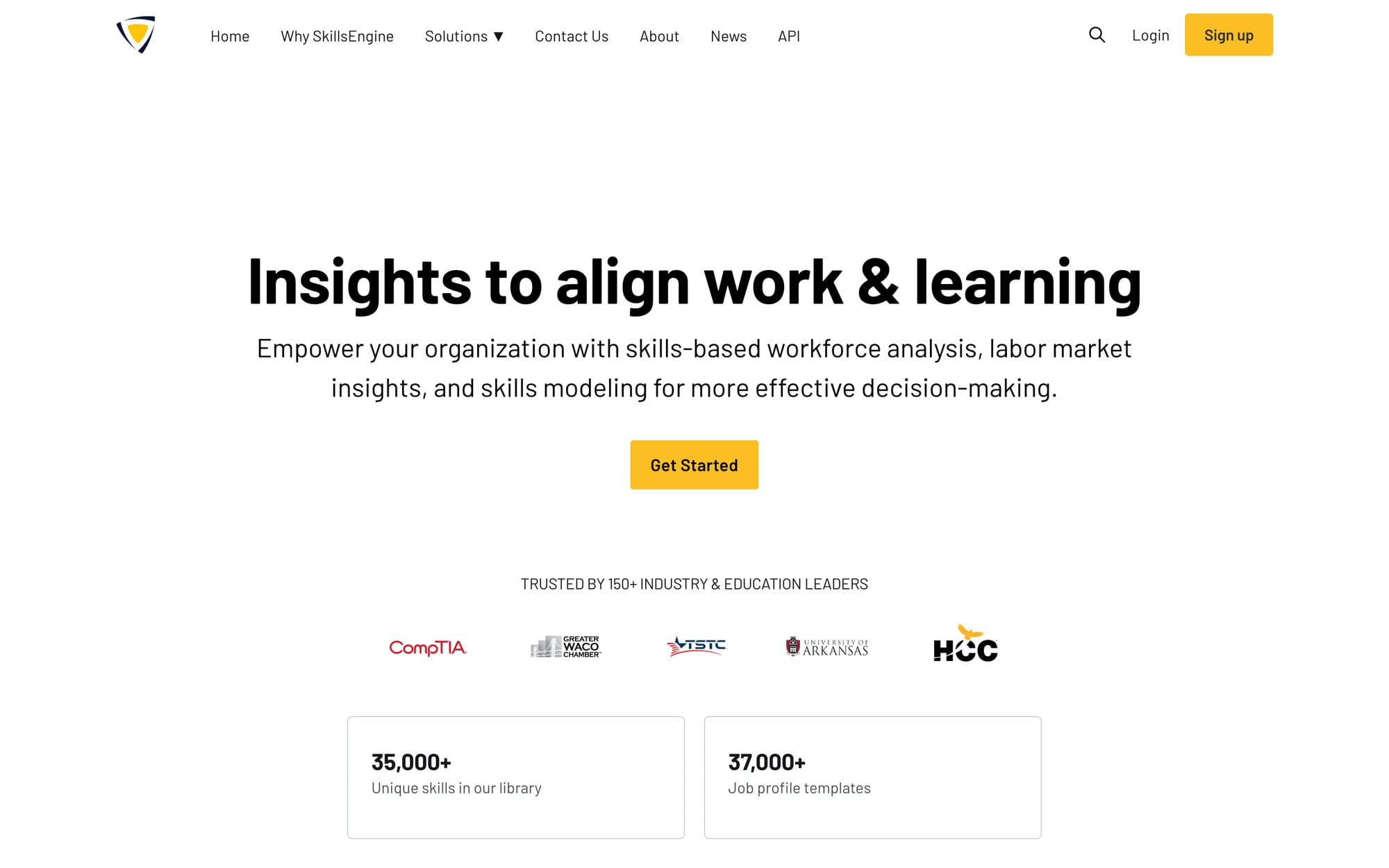
It changed how we engaged people: show it first, rather than tell it. Anyone, including individual students and teachers, could sign up for a free account and start testing the technology, with a path to enterprise licensing for any team. From the home page you could paste a job post, resume, or course description and see it turned into structured skills data.
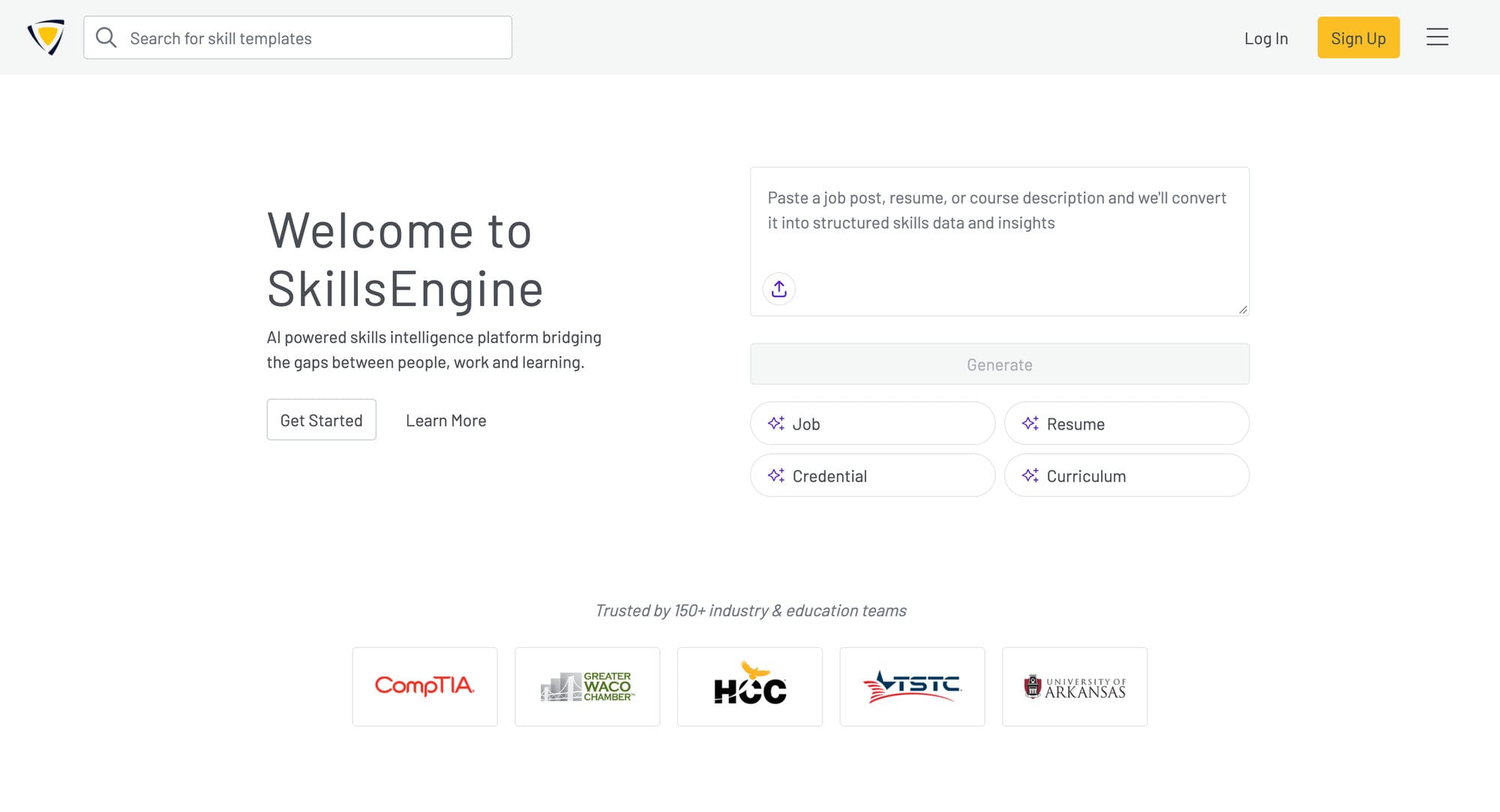
Home: paste text, get skills data, with no sales call.
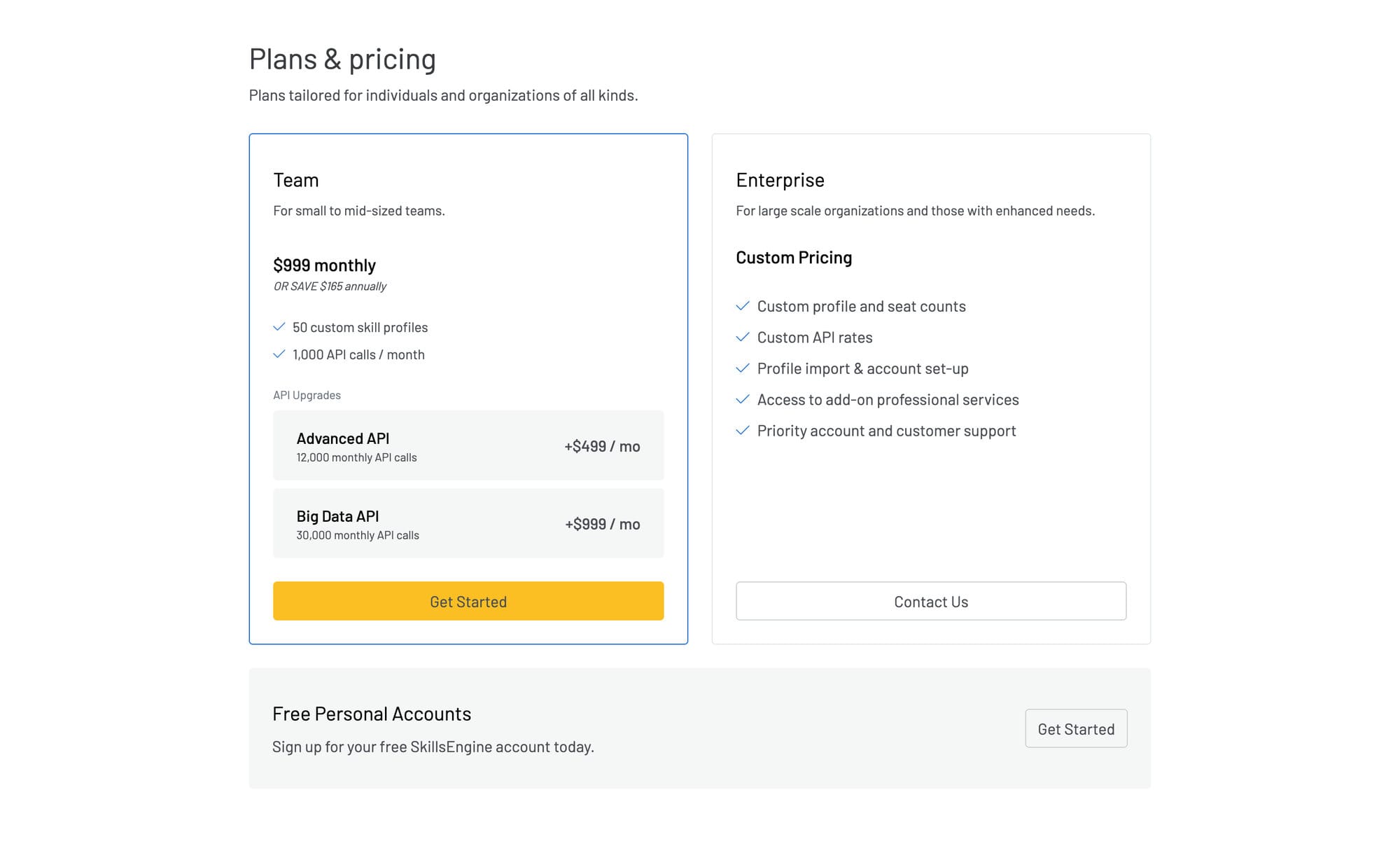
Free, pro, and enterprise on one page.
The change mattered because growth and scale were bottlenecked by the limits of custom consulting, and churn was high because delivery had been fragmented and unstable. This was before LLMs and modern generative AI. When AI arrived, we moved quickly to build it in, which is what Replit’s case study on the team covers. Skills-focused education and training organizations like CompTIA and the University of Arkansas engaged with SkillsEngine at scale, and we held government contracts across multiple states.
The rest of the site follows the same system: a page for each of eight audiences, an About story, and customer case studies.
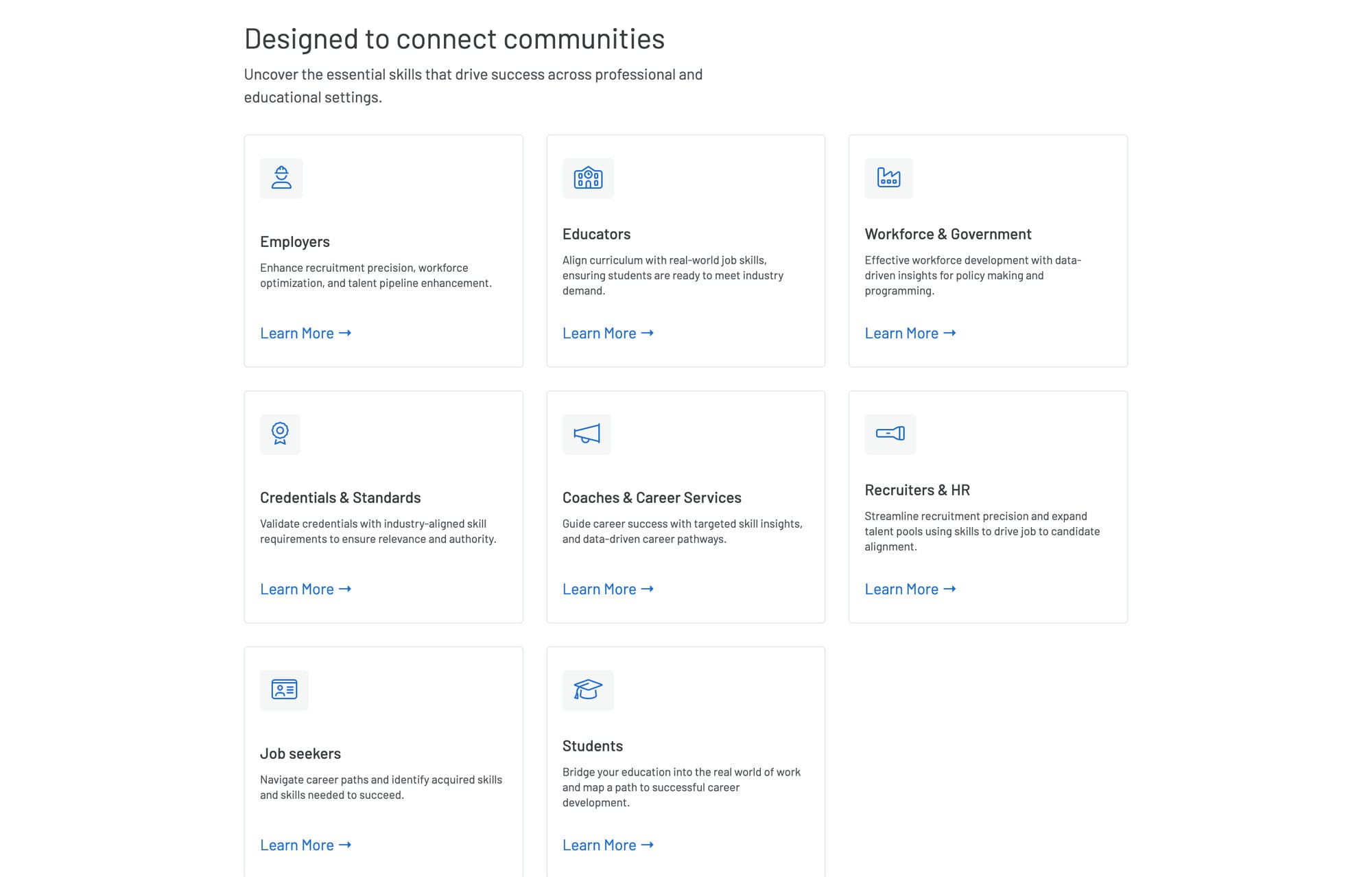
Eight audiences, each with its own page and next step.
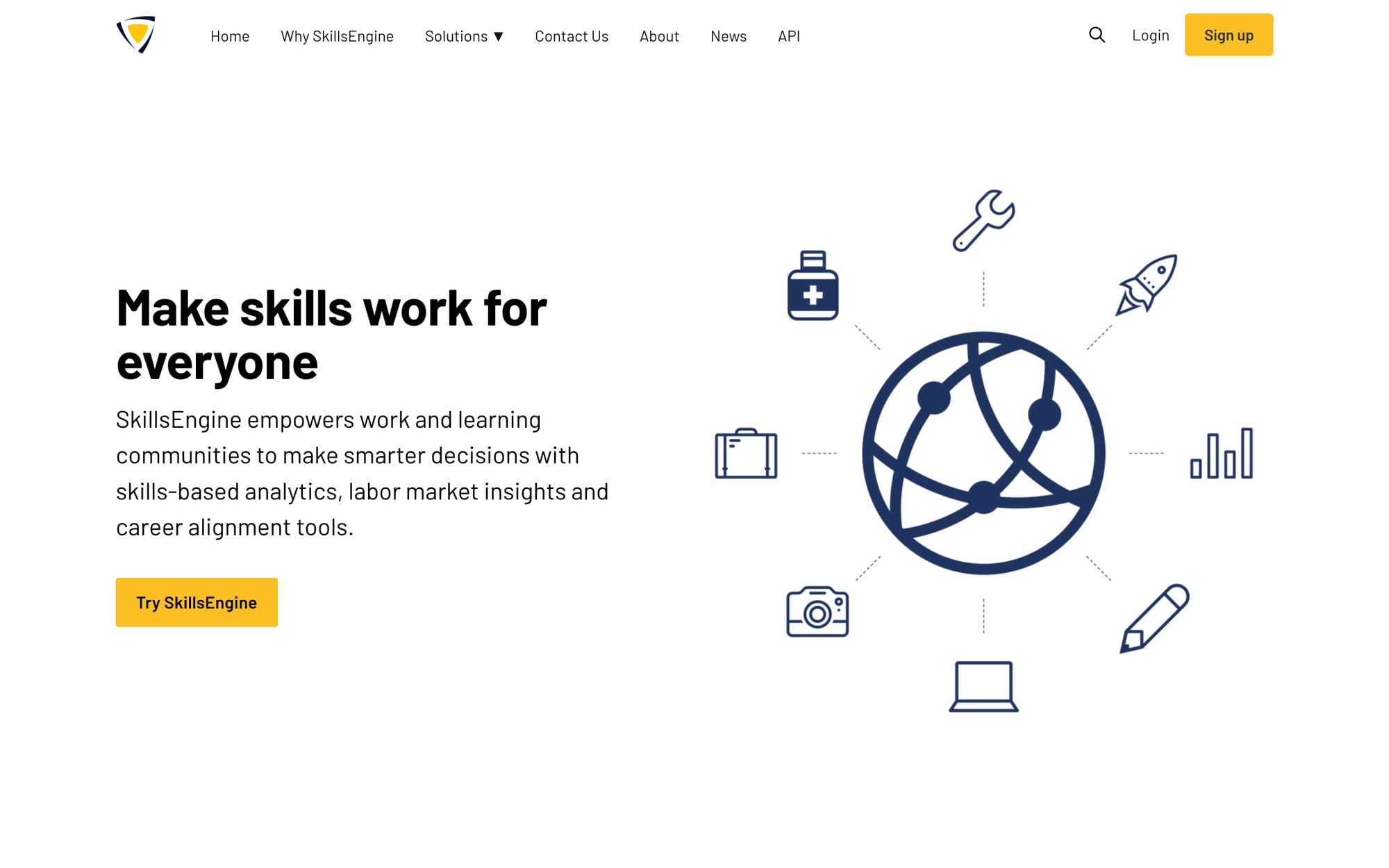
About: the mission and story.
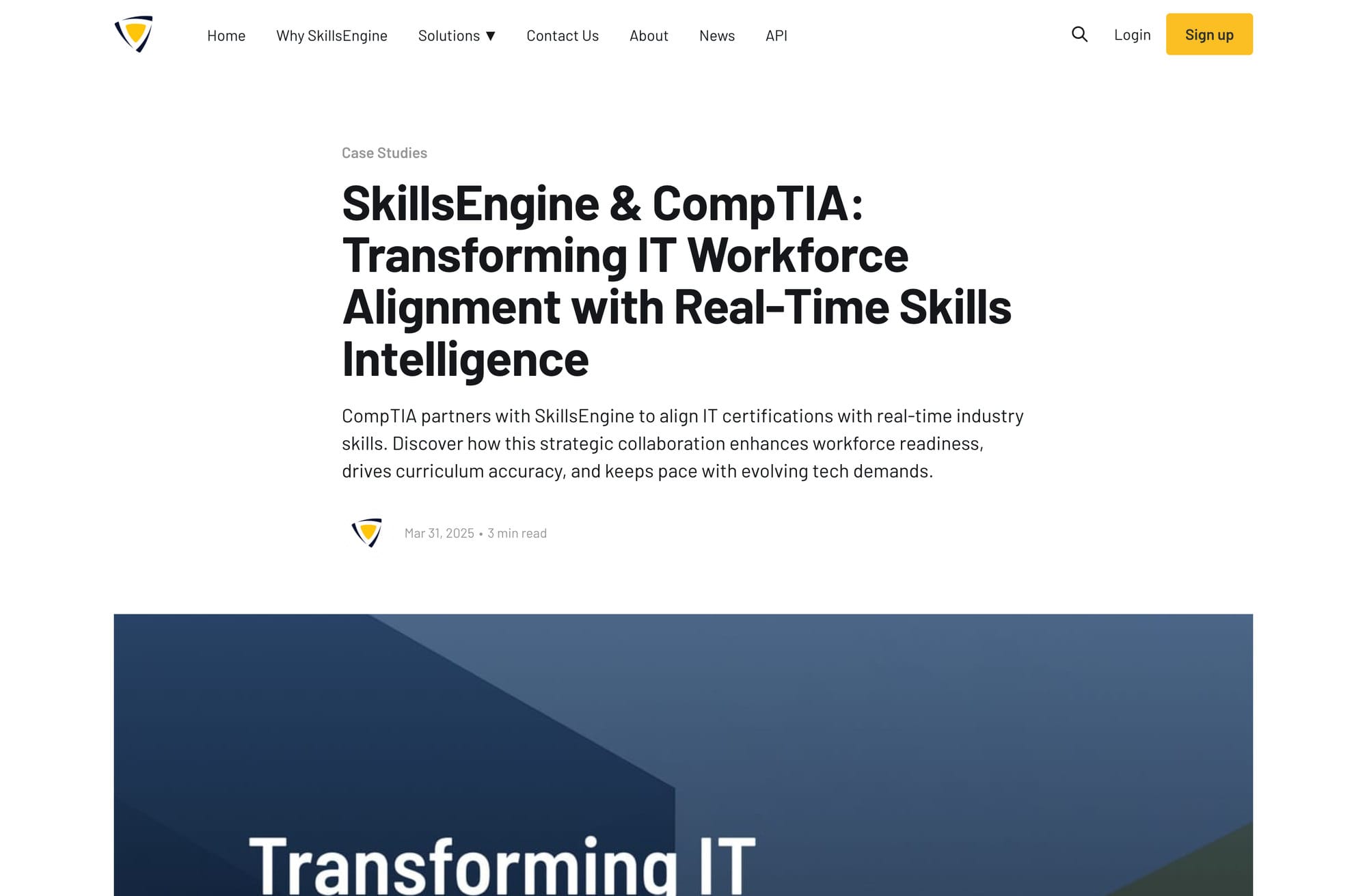
Customer stories sit alongside the product pages.
The refresh signalled a change in direction at SkillsEngine and re-engaged a number of lapsed customers. The customers shown on the home page were all won under my leadership. Since I left in 2025 the site has had minor additions, and it largely keeps the design, content, and branding I created.
The team
The team was rebuilt to 10 to 15 engineers, designers, and PMs, and I co-led it, working closely with Cameron Crockett, our Senior Director of Engineering. Part of the job was moving designers from no-code into shipping code. Replit’s July 2024 case study covers that shift: eight applications shipped, and my note there that I had coded more in 12 months than in the previous 10 years. I am also a quoted customer on Replit Pro.
What I built myself
I also built much of the early AI work with my own hands. The first functional prototypes of the AI features were Python scripts and Python applications that I wrote, both internal tools and live public apps: text-to-skills, resume generation, career map generation, skill profile pruning, profile metadata generation, and profile data enhancement. Some of the public apps are in AI mini-apps for work & learning.
I also built internal operations and marketing automations, including weekly social media listening and content generation, and customer support and bug ticket routing.
What changed
- The business moved from one-off custom solutions and consulting to a B2B data platform.
- The team went to 10 to 15 across design, engineering, and PM, with designers shipping code.
- Text-to-skills replaced days of consulting with a process under five minutes.
- We refreshed, overhauled, and aligned the brand, marketing, comms, website, and product so they read as one company.
Proof
The platform, Curate, text-to-skills, and the poster series are on this page. Replit’s writeup is the outside account of the team and the eight applications. More of the SkillsEngine work is in the archive: